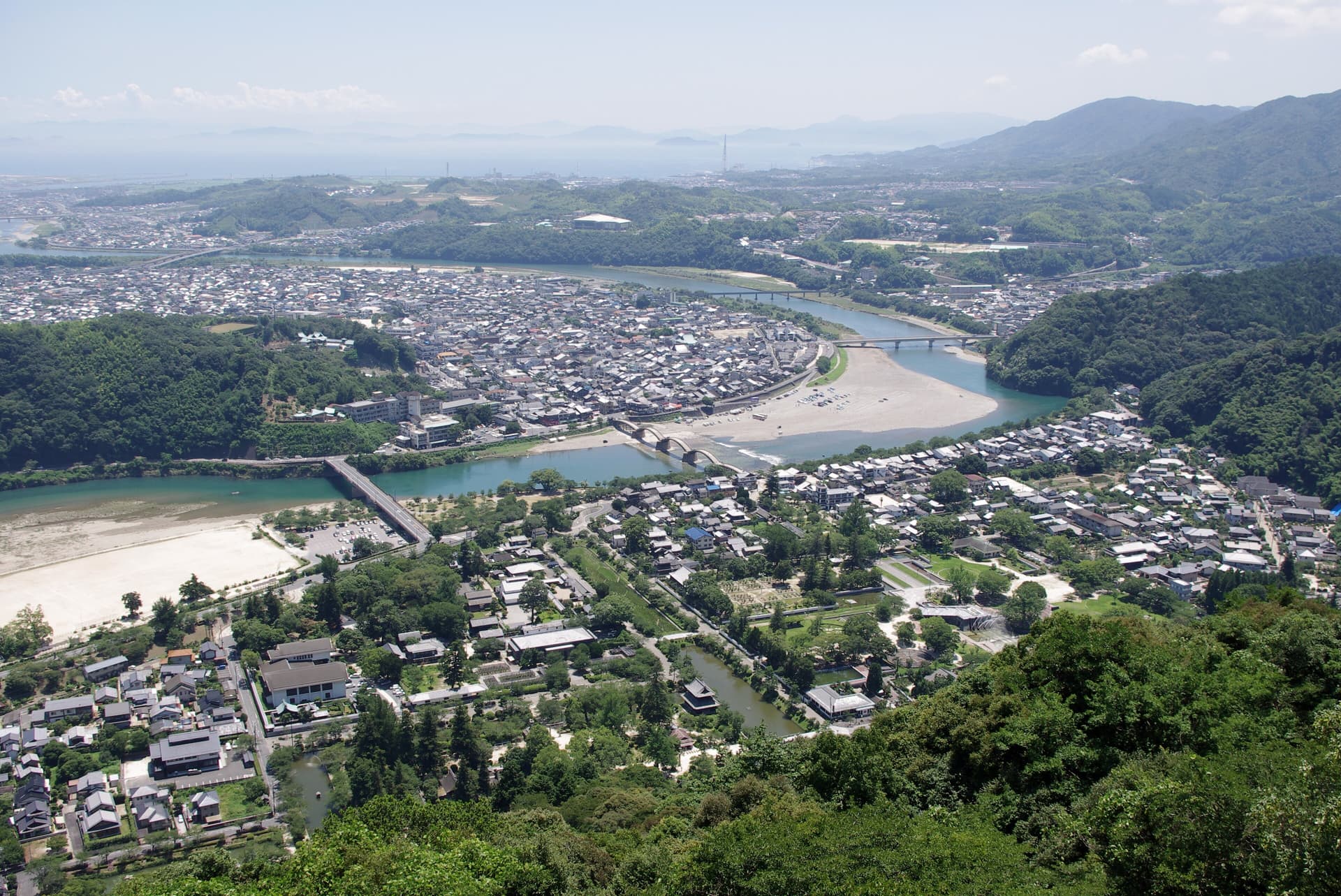
Iwakuni is a small city at the eastern end of Yamaguchi Prefecture, facing the Seto Inland Sea. Most visitors come for one thing — Kintaikyo Bridge — and leave two hours later. This guide is about getting more from it: the history that explains the bridge, how long to give the town, what it really costs and what else is worth your time.
A little history
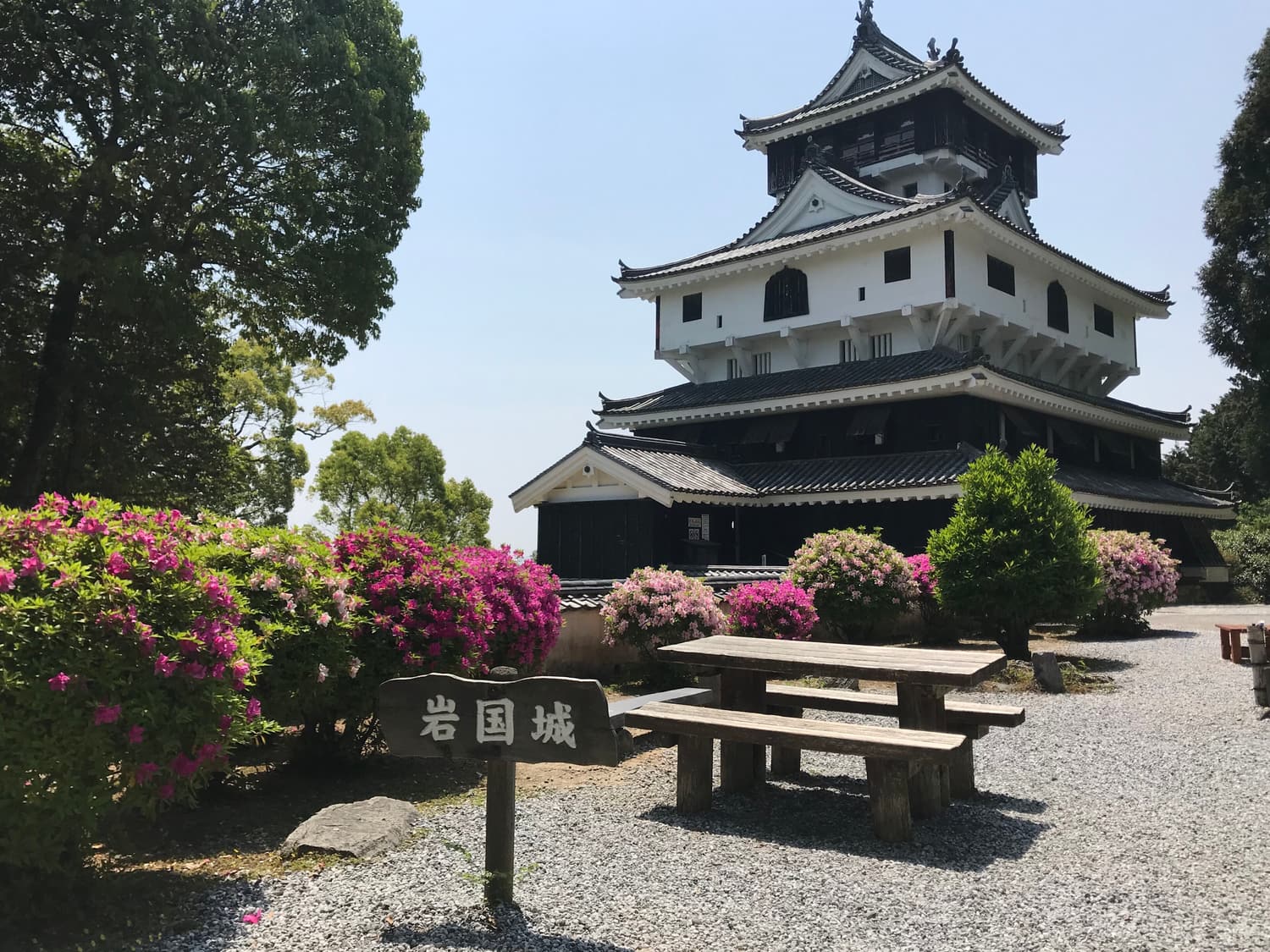
After the battle of Sekigahara in 1600 the Kikkawa family, a branch of the Mori clan, were moved to Iwakuni. Kikkawa Hiroie built his castle on the ridge above a bend in the Nishiki River, using the river as a moat. The castle stood for only a few years before it was dismantled under the shogunate’s one-castle-per-province rule, but the family went on governing from a residence at the foot of the hill — today’s Kikko Park — with the samurai on that bank and the townspeople on the other.
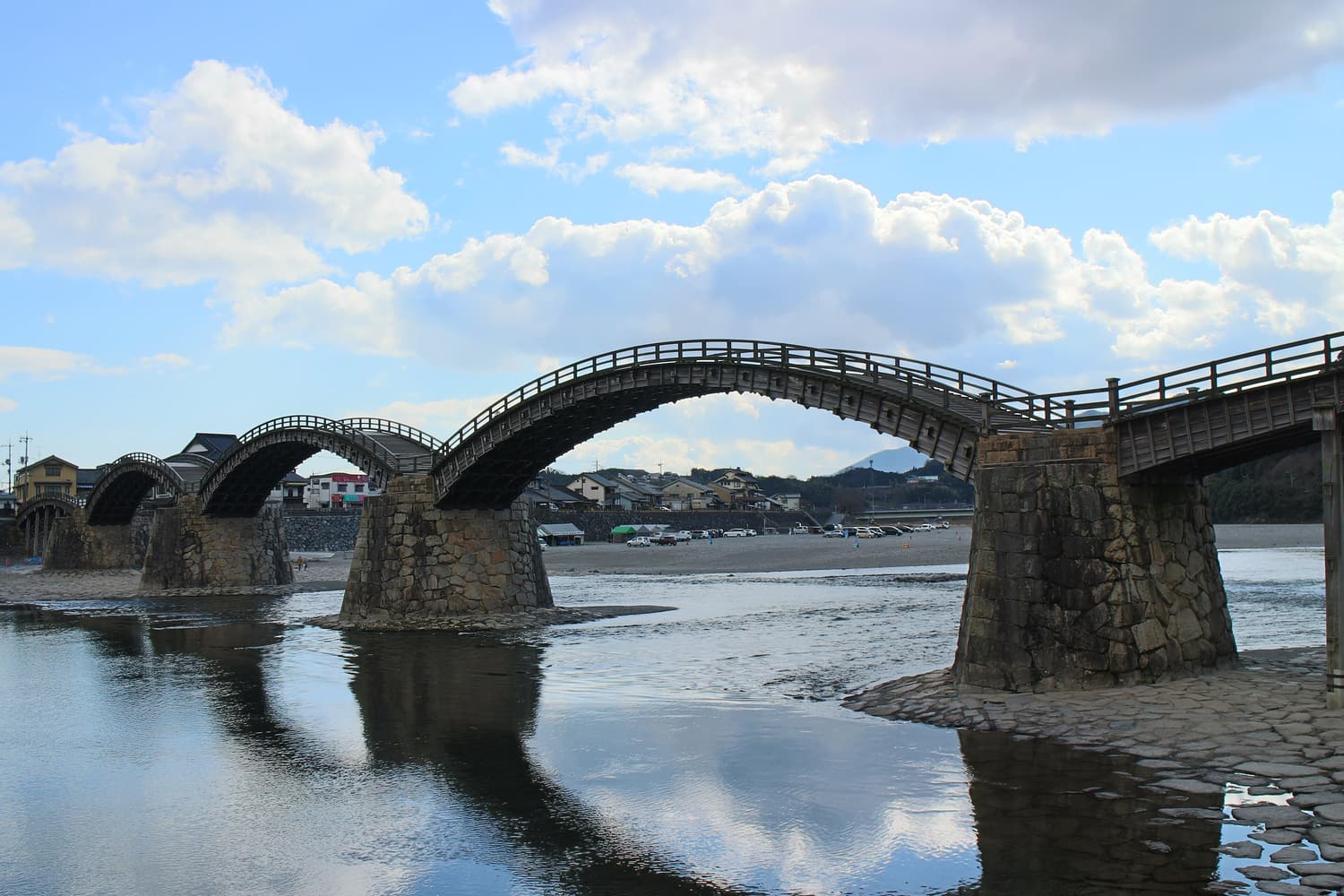
The river between them was wide and violent in flood, and bridge after bridge was swept away. In 1673 the third lord, Kikkawa Hiroyoshi, tried a new idea: a chain of arches leaping between massive stone piers, so that no wooden posts stood in the main current. The first bridge was lost to a flood the following year, was rebuilt at once on stronger foundations and then stood for some 276 years, renewed arch by arch by generations of carpenters, until a typhoon destroyed it in 1950. The townspeople rebuilt it in 1953, and the timber was completely renewed again between 2001 and 2004.
How long do you need?
- Two hours — the bridge, a stroll in Kikko Park and an ice cream. What a quick stop gives you.
- Half a day — add the ropeway, the castle and the White Snake Museum. The sensible minimum.
- A full day — the samurai houses and museums, a long lunch of Iwakuni sushi, a sake tasting.
- One night — the bridge lit up after dark and empty at dawn; in summer, cormorant fishing.
What to see
 Kintaikyo & castle side
Kintaikyo Bridge
Five wooden arches over the Nishiki River
Iwakuni’s reason for being on the map: a 17th-century timber bridge that leaps the Nishiki River in five arches on four stone piers. First built in 1673, it is still made by hand from wood — and you can walk across it at any hour.
 Kintaikyo & castle side
Iwakuni Castle & Ropeway
A hilltop keep with the whole valley below
A short ropeway ride lifts you from Kikko Park to the wooded ridge of Mount Shiroyama, where the white keep of Iwakuni Castle looks straight down on Kintaikyo, the river and, on clear days, the islands of the Seto Inland Sea.
 Kintaikyo & castle side
Kikko Park & the Samurai Quarter
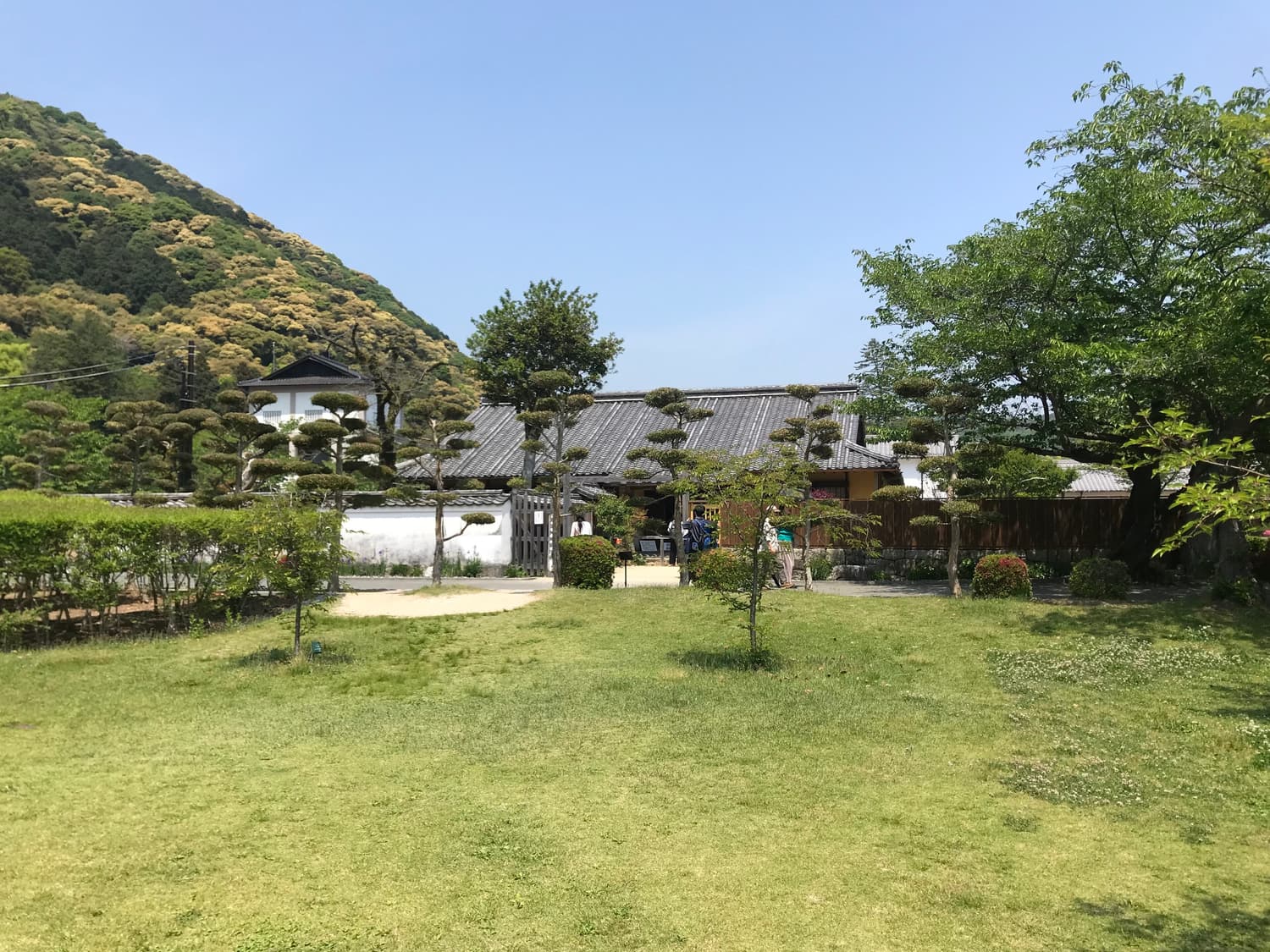
Where the lords of Iwakuni lived
Across the bridge lies the old domain headquarters: the grounds of the Kikkawa lords’ residence, now a park of moats, fountains, shrines, museums and surviving samurai houses such as the Mekata residence.
 Traditions, food & sake
White Snake Museum & Shrine
Iwakuni’s lucky albino snakes
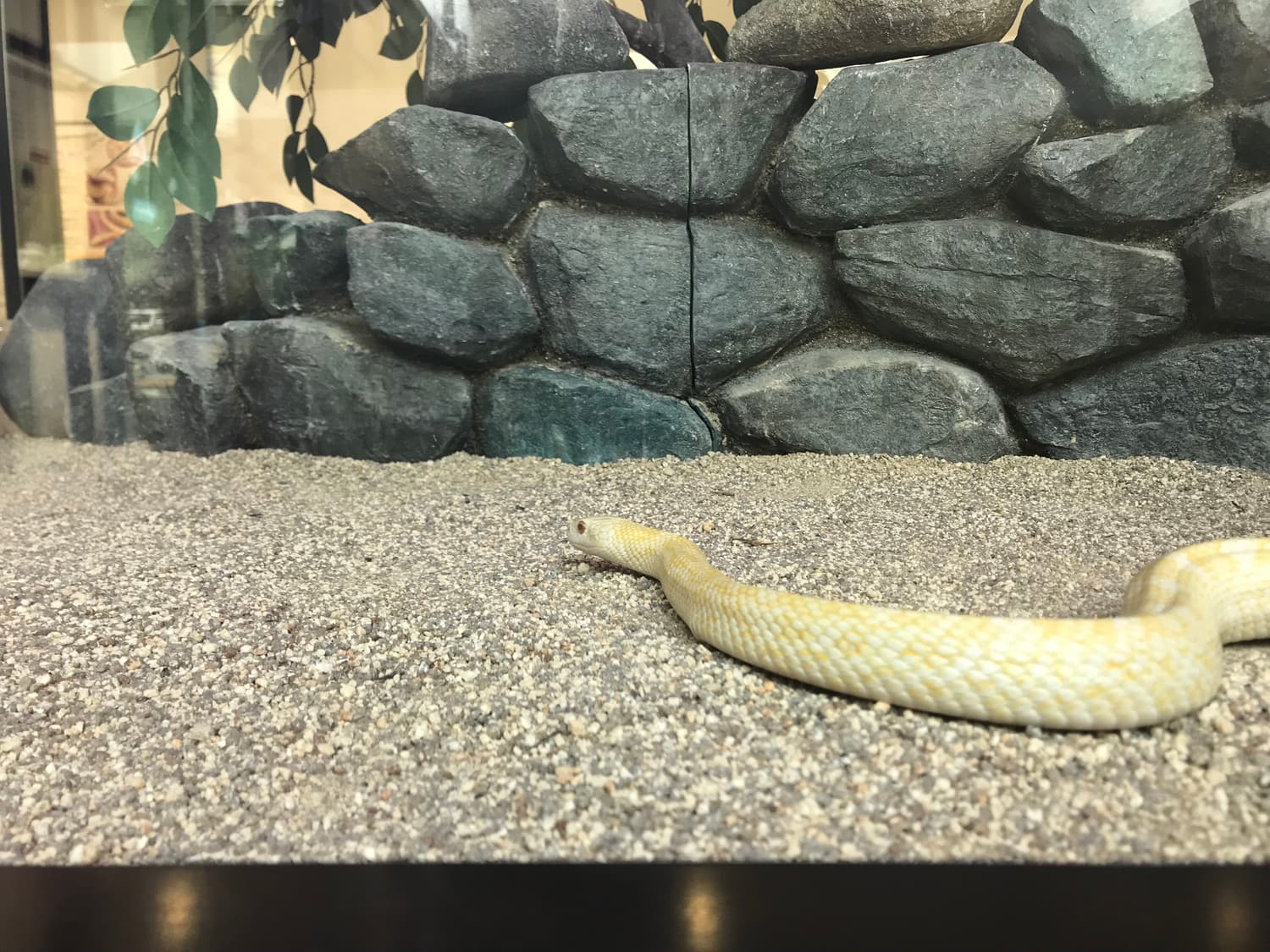
Iwakuni is the only place where white Japanese rat snakes have bred naturally for centuries. Protected as a natural monument and revered as bringers of good fortune, they can be seen at a small museum by the ropeway station and at a dedicated shrine.
See all of them, with directions and tours, in our things to see guide.
What it costs
Iwakuni is inexpensive. Typical prices are below — they do change, so treat them as a guide and check current rates on the spot.
| Item | Typical price |
|---|---|
| Kintaikyo Bridge toll (return) | Around ¥300 |
| Combination ticket: bridge + ropeway + castle | A little under ¥1,000 |
| Kikko Park, Mekata residence | Free |
| White Snake Museum | A few hundred yen |
| Kikkawa Historical Museum | Around ¥500 |
| Bus, Iwakuni Station to Kintaikyo | Around ¥300 each way |
| Train, Hiroshima to Iwakuni | Under ¥1,000 each way |
| Soft-serve ice cream | A few hundred yen |
| Iwakuni sushi set lunch | Roughly ¥1,500–2,500 |
What to eat and drink
The dish to try is Iwakuni-zushi: sushi rice pressed in a large wooden mould in layers with fish, lotus root, shiitake, thin omelette and bright pink fish floss, then cut into neat squares. It is often served with ohira, a gentle stew of chicken and vegetables. Iwakuni renkon — the local lotus root — turns up in both, as well as fried and in snacks. On the far side of the bridge, rival shops sell soft-serve ice cream in more than a hundred flavours.
Iwakuni is also a serious sake town: Dassai is brewed in the hills here, and Gokyo and Kinkan Kuromatsu are local too. Shops by the bridge offer tastings. Read more in our food guide and sake guide.
Where to stay
Most people visit on a day trip from Hiroshima, but there are good reasons to stay:
- By the bridge — a few ryokan and a hot-spring hotel, some with bridge views.
- By Iwakuni Station — practical business hotels, easy for trains.
- Miyajima or Hiroshima — if Iwakuni is one stop on a wider trip.
We compare them on our where to stay page.
Events and festivals
- Cherry blossom season (late March to early April): the riverbanks and Kikko Park fill with blossom and picnickers.
- Kintaikyo Festival (29 April): a costumed daimyo procession crosses the bridge.
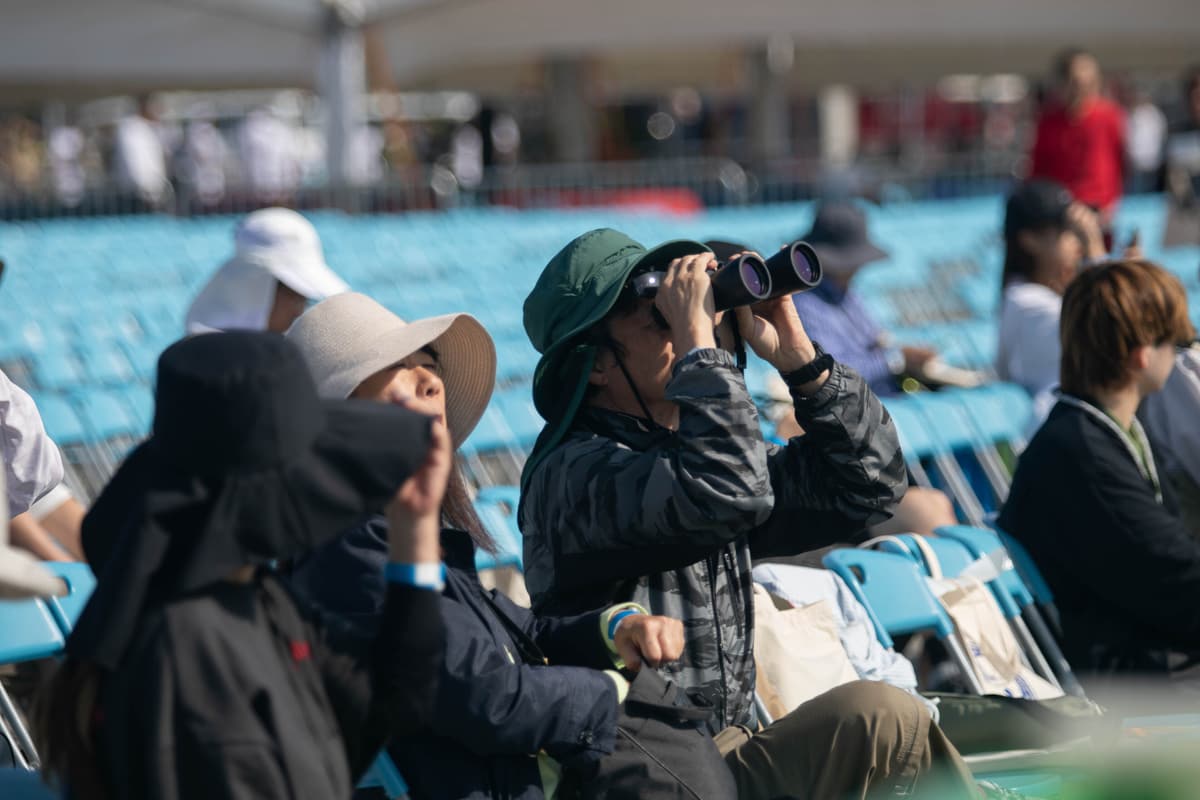
- Friendship Day (usually around early May): the Marine Corps Air Station opens its gates for a big air show. Dates and entry rules vary from year to year — check before you plan around it.
- Cormorant fishing (roughly June to early September): evenings on the river — see our ukai guide.
- Fireworks (early August): a summer display over the bridge.
- Autumn leaves (mid to late November): Momijidani Park turns red.
Practical details
- Money: yen. Carry cash for the bridge toll, buses and small shops; cards are accepted at larger hotels and some restaurants.
- Language: Japanese. Because of the nearby air station, English is a little more widely understood than in most towns of this size, and the main sights have English signs.
- Getting around: the Kintaikyo area is entirely walkable. The bridge has steps on its arches and can be slippery when wet.
- Accessibility: the stepped arches are difficult for wheelchairs and pushchairs; a modern road bridge nearby reaches Kikko Park without steps.
- Safety: Iwakuni is very safe. Keep off the riverbed when the river is rising.
- Luggage: coin lockers are available at Iwakuni Station; ask at the bus centre by the bridge about left luggage there.
- The air station: Marine Corps Air Station Iwakuni, shared with Japan’s Maritime Self-Defense Force, lies on the coast. You will hear aircraft; the base itself is not open to visitors except on Friendship Day.
Going further: Kyushu and Shikoku
Iwakuni sits at the eastern edge of Yamaguchi Prefecture, and the Sanyo Shinkansen runs the length of it. Heading west, Kodama trains from Shin-Iwakuni reach Kokura in roughly an hour, just across the Kanmon Strait in Kyushu — our guide to the Kanmon Straits covers the undersea pedestrian tunnel, the little ferry to Shimonoseki and Mojiko Retro.
To the south, the Seto Inland Sea separates you from Shikoku. A car ferry from Yanai, about 35 minutes down the JR Sanyo Line, crosses to Matsuyama in around two and a half hours, and our Ehime travel guide covers Matsuyama, Dogo Onsen and the Shimanami Kaido.
What to pack
- Shoes with grip — the bridge’s wooden steps are worn smooth.
- Sun protection and water in summer; it is hot and humid from July to September.
- A light rain jacket in June and July, the rainy season.
- A warm layer for the castle hill in winter and for evening boat rides.
- Cash in small notes and coins.
Common mistakes
- Getting off at Iwakuni Station and expecting to see the bridge. It is a bus ride away.
- Skipping the ropeway. The view of the bridge from above is the best in town.
- Paying for the bridge, ropeway and castle separately instead of buying the set ticket.
- Arriving after the ropeway and museums have closed for the day — most shut around 17:00.
- Squeezing Hiroshima, Miyajima and Iwakuni into a single day. Two of the three is plenty; see our tour comparison.